
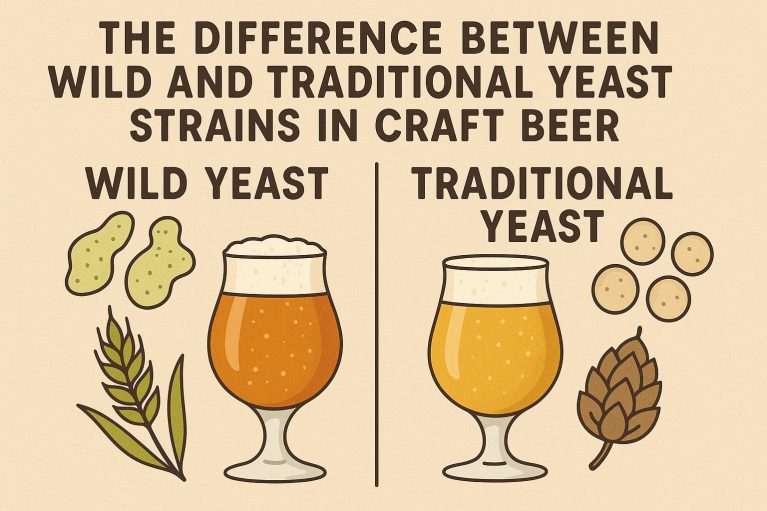
The Role of Yeast in Beer Brewing
In the craft beer industry, yeast plays a pivotal role in fermentation, transforming sugars into alcohol and carbon dioxide. Beyond fermentation, yeast strains significantly affect the flavor, aroma, and character of the final product. Understanding the difference between wild and traditional yeast strains is crucial for any craft beer enthusiast or brewer.
Traditional Yeast Strains
Traditional yeast strains, often categorized under the species Saccharomyces cerevisiae, are commonly used in controlled brewing environments. These yeasts are selected for their consistency and reliability, crucial traits for producing beer with predictable flavors and stable quality. Such strains are cultivated and propagated under controlled conditions, allowing brewers to fine-tune their brewing processes to achieve desired flavor profiles.
Characteristics of Traditional Yeast
Traditional yeast strains are known for several defining characteristics that have made them a staple in breweries across the world. Firstly, predictability is one of their most valued attributes. When a brewer uses a traditional yeast strain, they can expect consistent results, essential for maintaining uniformity across different batches of beer. This predictability ensures that consumers receive the expected taste and quality in every sip.
Another crucial characteristic is flavor production. Traditional yeasts contribute to a well-balanced and clean beer profile, often characterized by subtle ester and phenolic production. These flavor compounds can impart hints of fruitiness or spice, rounding out the beer’s profile without overwhelming it. This balance is ideal for numerous beer styles where the malt and hop flavors should be prominent but not overshadowed by yeast-derived flavors.
Furthermore, traditional yeast strains are known for their speed and efficiency during fermentation. These strains typically ferment faster than their wild counterparts, reducing production time and increasing yield. This efficiency allows breweries to produce more beer in less time, optimizing their operations and maximizing their equipment’s utility.
Wild Yeast Strains
Contrasting traditional strains, wild yeast strains introduce an element of unpredictability in brewing. Wild yeast strains are often associated with spontaneous fermentation processes. These yeasts include both wild types of Saccharomyces and non-Saccharomyces varieties such as Brettanomyces. Used in the production of sour beers, lambics, and other innovative styles, wild yeasts thrive in open or mixed fermentations and contribute to complex flavor profiles.
Characteristics of Wild Yeast
Wild yeasts are characterized by the complexity they bring to the beer they ferment. Their fermentations can result in intricate flavors and aromas, often including fruity, funky, and sour notes. These distinctive profiles are beloved in specific beer styles, such as farmhouse ales, where complexity is a virtue.
However, with complexity comes unpredictability. The fermentative behavior of wild yeasts varies considerably, leading to unique and less reproducible brews. This unpredictability can be a double-edged sword for brewers. On one hand, it allows for the creation of unique and one-off beers that can be highly sought after by aficionados. On the other hand, it poses challenges in maintaining consistency, which is key in commercial brewing.
Lastly, wild yeast fermentations often involve extended fermentation times. Unlike traditional strains that complete fermentation in a matter of days or weeks, wild strains may require months or even years to fully mature. This extended duration allows for a gradual development of flavors, often resulting in deep, layered taste experiences that evolve over time.
Implications for Craft Brewing
The craft brewing industry is characterized by innovation and diversity, where experimentation with ingredients and processes results in a wide array of beer styles. The choice between wild and traditional yeasts is not a question of quality but rather of creative intent. Traditional yeast strains are ideal for standard beer styles requiring consistency, enabling brewers to meet expectations for popular styles like pale ales, lagers, and IPAs.
Conversely, wild yeasts offer a dynamic option for brewers looking to push the boundaries of flavor. They provide the foundation for more unconventional styles like sours, lambics, and farmhouse ales, where unpredictability and complexity are appreciated. Each approach has its place within the diverse landscape of craft beer, catering to different palates and brewing philosophies.
Understanding the nuances of these yeast types is crucial for any brewer or enthusiast wishing to explore the full potential of beer production. Traditional and wild yeast strains each bring distinct advantages, and the decision to use one over the other depends heavily on the specific goals of the brewing endeavor.
Conclusion
In conclusion, whether brewers opt for the reliability of traditional yeasts or the adventurous path of wild strains, the potential for crafting innovative beer experiences is vast. Each strain type contributes uniquely to the art and science of brewing, enhancing the ever-evolving tapestry of beer flavors available today. Brewers who master the use of both types of yeasts can enjoy a wide palate of options, crafting beers that can range from the crisp and straightforward to the multi-dimensional and surprising. The continued exploration of yeast’s role in brewing promises to further enrich the diversity and complexity of offerings in the craft beer scene, inviting beer lovers to continually discover and enjoy new flavors and styles.