
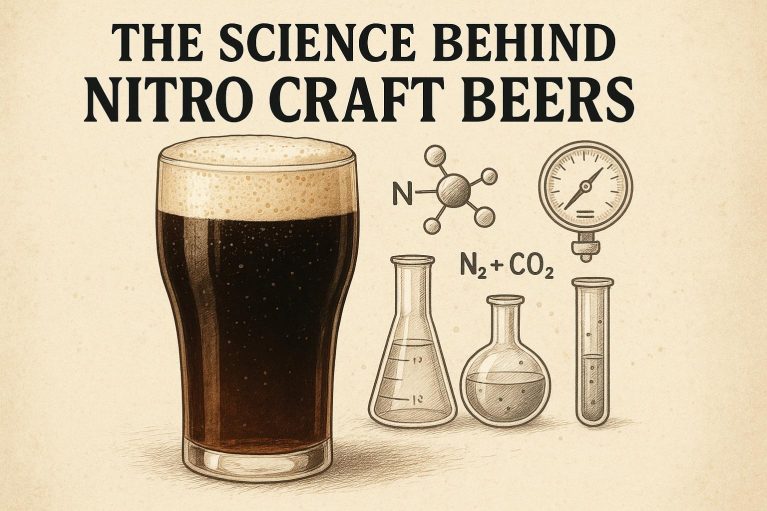
Introduction to Nitro Craft Beers
Nitro craft beers have surged in popularity within the realm of craft beverages, capturing the attention of brew enthusiasts and casual drinkers alike. The growing fascination is primarily due to the distinct texture and flavor profile that nitro beers offer, stemming from unique carbonation techniques. Unlike traditional carbonation that relies on compressed carbon dioxide (CO2), nitro beers utilize nitrogen gas (N2) or a blend of nitrogen and CO2. This article delves into the scientific intricacies that make nitro craft beers so distinctive and explores how these differences manifest in the drinking experience.
The Role of Nitrogen in Beer
The introduction of nitrogen in beer fundamentally changes its sensory characteristics. One of the critical differences lies in the solubility of gases. Nitrogen has a significantly lower solubility in liquids compared to carbon dioxide. This characteristic leads to an intriguing phenomenon when the beer is poured: nitrogen gas exits the liquid more swiftly, creating a mesmerizing cascading effect inside the glass. This cascading is more than just a visual spectacle; it also contributes to the beer’s overall texture by fostering a creamy mouthfeel. The smaller nitrogen bubbles, packed more densely than their CO2 counterparts, form a smooth, velvety foam head similar to that seen in traditional stout beers, which are often associated with nitro infusion.
Impact on Flavor Profile
Although nitrogen itself is an inert gas and does not directly alter the beer’s flavor, it plays a crucial role in how certain flavors are perceived. The presence of nitrogen results in reduced carbonation, allowing the malt characters of the beer to become more prominent. This change often results in a sweeter and less acidic flavor profile, which can bring out the more subtle flavors in stouts, porters, and other malt-forward beers, creating a richer taste experience.
Nitro Dispensing Systems
The production and serving of nitro beers require specific equipment to handle the unique properties of nitrogen gas. Breweries typically employ a nitrogen infusion system to incorporate nitrogen into the beer after fermentation. This process is accomplished through various methods such as nitrogen capsules or tanks that enable the desired mixture of gases. Serving nitro beers involves using a specialized nitro beer faucet, designed for low-pressure pouring to cultivate the nitrogen-induced cascade effect. These faucets include restrictor plates, which are essential for producing the iconic creamy texture that identifies nitro beers.
Comparing Nitro and CO2 Beers
Understanding the differences between nitro and CO2 beers is crucial for appreciating what nitro beers bring to the table. Carbon dioxide, a conventional choice for beer carbonation, sharpens the beer’s crispness and accentuates the bitterness imparted by hops. In contrast, nitro-infused beers offer a smoother, more subdued drinking experience, marked by reduced effervescence. For many drinkers, this smoothness makes nitro beers more approachable, especially for those who might find the sharpness and fizziness of CO2 beers overwhelming.
Versatility in Beer Styles
While nitro beers are historically linked to stouts and porters, brewers are progressively experimenting with infusing other styles with nitrogen. The development of nitro IPAs and similar styles highlights the adaptability of nitrogen, showcasing how its properties can be beneficial across various beer styles. Nitrogen’s role in these beverages broadens the flavor and texture palette available to consumers, inviting them to explore new dimensions of beer enjoyment.
Consumer Preferences
The rising popularity of nitro beers is, in part, driven by changing consumer preferences. As craft beer enthusiasts continuously seek novel and unique experiences, the distinctive sensory qualities of nitro beers present an attractive alternative to traditional carbonation techniques. Breweries that innovate with nitro techniques often receive favorable responses, captivating those interested in experiencing nuanced textures and subtle flavors that deviate from the standard beer offerings.
Conclusion
In conclusion, the fascination with nitro craft beers arises from the elegant interplay between scientific principles and sensory enjoyment. The incorporation of nitrogen not only heightens the beer’s visual appeal and texture but also introduces a novel dimension to its flavor profile. For beer enthusiasts and brewers, understanding the science and application of nitrogen in brewing opens up a myriad of creative opportunities in craft beverage production. This understanding enriches the beer-drinking experience, inviting both traditionalists and experimentalists to explore and appreciate the diverse world of nitro-infused craft beers. As the landscape of craft beer continues to evolve, nitro beers stand at the forefront, representing an exciting frontier of what brewing innovation can achieve.